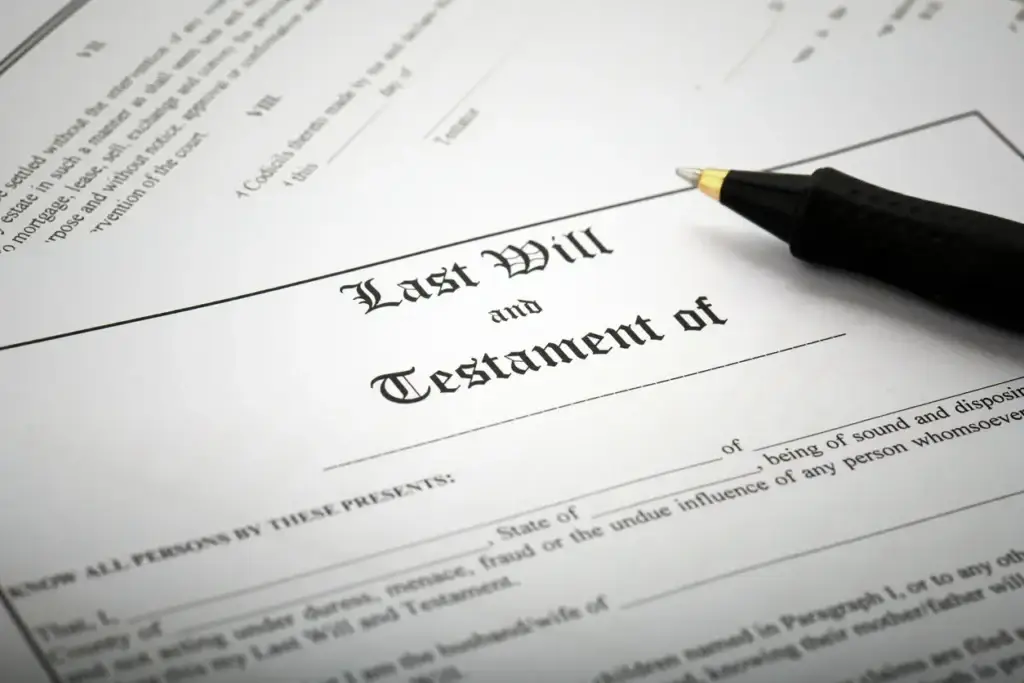


In most instances, a new will overrides an old will — provided the new will is valid and clearly revokes all prior wills. When a will is properly executed, it not only revokes all prior wills, but replaces them as the official last will and testament of the will creator (called the testator).
That said, certain factors could complicate a new will’s ability to override an old will. For example, if a new will was executed without two disinterested witnesses being present, the will may be considered invalid in certain states, such as California. In the same vein, if the language of a new will fails to clearly convey whether the decedent intended for the new will to revoke the old will or merely modify it, it could prevent the new will from fully superseding the old will.
Ideally, a testator will have worked with a knowledgeable estate planning attorney to create their will. If they did, their new will generally will override their old will just as they intended. Unfortunately, many testators forego legal guidance from a professional, which often creates confusion among competing wills and causes their will to be disputed after their death.
Say a decedent created a new will to replace their old will but failed to include language in their new will to revoke the old will. After their death, this creates significant confusion for the executor of the estate and beneficiaries, as they are unsure whether the document purported to be the will is intended to just modify the terms of the old will or altogether revoke the will.
If the new will and old will are submitted to the court for review, the court generally will uphold any terms of the new will and old will that don’t contradict each other. It is unlikely an old will could completely supersede a new will, since the new will was created later in time.
Although there is little an executor, beneficiary, or heir can do to fix an invalid, incomplete, or ambiguous will, especially if it doesn’t expressly and fully revoke prior wills, they are not without legal options. To find the most appropriate legal option for your specific issue, consulting with a skilled trust and will dispute attorney is recommended.
Can a New Will Be Executed at Any Time?
A testator has the right to execute a new will at any time, provided they have the mental capacity required to execute the document and are doing so of their own free will.
The standard of capacity a testator must meet to create a valid will is referred to as testamentary capacity. According to California Probate Code section 6100.5, a decedent lacks testamentary capacity if:
- They cannot understand the nature of the testamentary act.
- They cannot understand and recollect the nature and situation of their property.
- They cannot understand and recollect the nature of their relations to their living descendants, spouse, parents, and those whose interests are affected by the will.
- They suffer from a mental health disorder with symptoms like delusions or hallucinations that cause them to devise property in a way they wouldn’t have had the delusions and hallucinations not existed.
What Makes a New Will Override an Old Will?
According to California Probate Code section 6120, for a new will to override an old will, it’s generally required for the new will to either expressly revoke the old will or be inconsistent with the old will.
If the testator intends to expressly revoke the will, they must make a revocation by writing. Most testators meet this requirement by including a revocation clause in their will that makes clear all prior wills are revoked. If a testator intends to revoke a will by inconsistency, they should make sure the terms of their new will directly contradict the terms of their old will.
It should go without saying that, in addition to including a revocation by writing or inconsistency, the new will should be complete, unambiguous, and valid. In short, it should meet all of California’s will requirements.
If you’re unsure whether a decedent’s new will overrides their old will, consulting with a probate attorney can help provide clarity.
How Long Does It Take for a New Will to Override an Old Will?
Once a new will has been executed (i.e., signed by the testator and witnessed by two disinterested persons), there is no waiting period for the new will to “override” the old will, or, more accurately, replace it.
That said, whether new or old, a will does not take effect until after the testator dies. There are no exceptions to this rule. This means the executor cannot get a jump start on administering the will or providing beneficiaries with their inheritances. Not only must a will be lodged with the court and authenticated before it can guide the distribution of assets, the executor also must be appointed.
Are Old Wills Valid?
Typically, when someone creates a new will, the new will contains terms to formally revoke the prior will. If there are no terms revoking the terms of the old will, the terms of an old will aren’t necessarily invalid. Rather, only the terms of the old will that are inconsistent with the terms of the new will generally will be superseded.
When Might an Old Will Override a New Will?
An old will might take precedence over a new will if, say, the new will is faulty in some way.
Say an old will was carefully constructed with help from an estate planning attorney, but the new will was thrown together by the testator in a hurry. With the new will not containing a revocation clause or accounting for a significant portion of the testator’s assets, a beneficiary challenges its validity in court. If the will is declared invalid, the old will may, at least in part, override the new will.
In the following sections, explore other scenarios in which an old will could override a new will.
New Will Is Invalid
For a new will to be deemed invalid, you must be able to show it meets at least one valid ground for contesting the will.
Valid grounds for contesting a will include:
- Undue Influence: Excessive persuasion may have been used on the decedent to make them create or revoke a will.
- Fraud: Someone may have intentionally misled or deceived the decedent to make them create or revoke a will.
- Lack of Capacity: The decedent lacked the capacity needed to create or revoke a will.
- Forgery: Someone may have falsified the decedent’s signature on their will.
- Lack of Due Execution: The decedent may not have followed established legal procedures when executing or revoking their will.
- Mistake: The testator may have been mistaken about the nature of the document they were signing.
If a new will is successfully invalidated by an interested party contesting the will based on one or more of the grounds described above, it could cause the decedent’s old will to take precedence, meaning the old will would guide the distribution of estate assets instead of the new will.
Remember, the amount of evidence needed to contest a will can be significant, so involving a knowledgeable probate attorney in the process is advised.
New Will Fails to Fully Revoke Old Will
When a new will fails to fully revoke an old will (i.e., by not including a revocation clause) or is not entirely inconsistent with an old will (e.g., because each will addresses separate assets owned by the decedent), the new will could be regarded as a codicil to the prior will instead of as a completely new will. In this way, you could argue the old will is “overriding” the new will.
Say a testator created a will that left their house to their three children. Later, this same testator executes a new will leaving a different property they recently purchased to their new spouse. This new will doesn’t contain any language to revoke the prior will, nor does it address any assets besides the new property.
In this scenario, it’s entirely possible certain terms of the old will could override the new will. However, due to the complex nature of the dispute, it may be necessary to request guidance from the court on how to resolve it.
How the Court Resolves Issues With a New Will
Before determining that a new will can’t override an old will, the court will do its due diligence to get to the bottom of what the decedent’s true final intentions were. Once it has an idea, it will do its best to honor them.
To resolve issues with a new will, the court may take one or more of the following steps.
It May Examine the New Will and Old Will Together
While a new will alone may not paint a clear picture of the decedent’s intentions, examining the new will alongside the old will is likely to bring some clarity to the situation.
For example, if it’s unclear whether a decedent intended for their new will to revoke their prior will because the new will doesn’t contain a revocation clause, the court could regard the new will as a codicil to the prior will or as an implied revocation if it starkly contrasts the prior will.
It May Honor the Terms of the Old Will that Don’t Conflict with the New Will
If a testator’s new will fails to account for all the assets accounted for in their old will, their old will may not be at odds with their new will and can be used to guide the distribution of those specific assets.
That said, if the new will expressly revokes all prior wills, it may be difficult to revert to a prior will, even if it’s valid, without having the new will invalidated.
It May Invalidate the New Will
If a new will is found to have significant issues, such as being the result of undue influence, fraud, or a lack of capacity, the court may deem the will to be invalid. This may cause the decedent’s assets to be distributed according to the terms of the old will, if the old will was legal and valid, or according to intestate succession laws.
That said, receiving less than you expected is not an acceptable reason for seeking to have a will invalidated. To successfully challenge a will, the court must see that you have a valid legal basis.
FAQs: New Wills vs. Old Wills
We hope our article has provided you with the information you need to successfully and smoothly navigate any conflicts that could arise between an old will and a new will. However, if you require further information, our frequently asked questions below may be of help.
As always, our firm is available to provide personalized legal guidance if that’s what you need.
How is a will revoked?
There isn’t only one way to revoke a will. According to Probate Code section 6120, a will can be revoked by:
- A subsequent will which revokes the prior will, or a portion of the will, expressly or by inconsistency.
- Being burned, torn, canceled, obliterated, or destroyed with the intent and for the purpose of revoking it, by either the testator or someone in the testator’s presence at their direction.
It’s important to point out that a will can also be revoked by operation of law. For example, if a will names the testator’s divorced spouse as the sole estate beneficiary, the gift to the ex-spouse could be revoked on account of the testator no longer being married to the beneficiary.
If you believe a will was improperly revoked, it’s crucial to touch base with an attorney to determine what legal options you may have to restore it.
Can I change an existing will without executing a new one?
Yes, to change an existing will without executing a new one, you simply must execute a codicil, which is an amendment to a will.
Should you keep old wills?
Although the decision ultimately lies with you, it wouldn’t hurt to hold on to old wills.
If you are the testator, keeping old wills could help you — as well as your loved ones — maintain a record of the changes you’ve made to your will throughout your life.
If you are an executor, beneficiary, or heir, keeping old wills could help ensure you have evidence to back up any claims you make against a will.
Can a will be changed at any time?
Yes, a will can be changed at any time. The only exception is if you lack mental capacity. A lack of capacity means you are not entitled to change a will, even as the testator.
How much does it cost to cancel a will?
It’s impossible to say for certain how much it will cost for you to seek a will’s nullification without knowing the specifics of your situation.
For example, canceling your own will while you are living could be relatively inexpensive if done through a reputable estate planning attorney. On the other hand, challenging the validity of a will in court could cost tens of thousands to hundreds of thousands of dollars — it all depends on how much money is at stake, the resolution you’re seeking, and how complex your situation is.
That said, even if you spend loads of money on your case, there is no guarantee you will succeed in having the will canceled.
If you call us, we may be able to provide you with a more accurate analysis of your case, as well as an estimate of how much it will cost.
Still have questions about wills?
Navigating wills can be challenging, especially when multiple wills exist that conflict with one another. Fortunately, the skilled probate attorneys at Keystone Law specialize in resolving complex will disputes.
With extensive experience handling matters related to wills and estates, we have the knowledge and expertise to guide you through even the most complicated of cases, fighting on your behalf to secure for you the inheritance that’s rightfully yours.
No matter how difficult your situation may seem, we are here to help. Call us today to learn more.