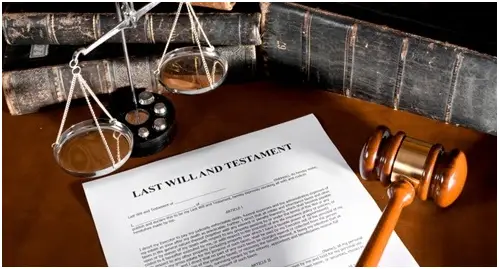


When a property deed conflicts with the terms of a decedent’s will, the deed typically will prevail over the will, but there are a number of factors, including the type of interest conveyed by the deed, that could produce different results.
Deeds may take precedence over a will for a straightforward reason: A will only governs probate assets — those not held in a trust or passed down through automatic transfers (such as by beneficiary designations or deeds). Since properties governed by deeds sometimes transfer outside the probate process, deeds can potentially override any conflicting terms in a will.
Suppose a decedent created a will in which he left his residence to his adult child. After remarrying years later, he executed a transfer-on-death (TOD) deed for the same property, naming his surviving spouse as the beneficiary. Due to the nature of a TOD deed, the spouse was directly transferred full ownership of the property upon the decedent’s passing, causing the decedent’s child, who believed she was entitled to the property due to the terms of the decedent’s will, to contest the deed transfer.
In this scenario, the decedent’s child would need to take action to contest the deed to have a chance of inheriting the property because the TOD deed facilitated an immediate transfer of the property outside of probate, meaning the decedent’s will never had any control over it.
However, there are still limited circumstances in which it may be possible for the will to “override” the deed. For example, if it can be proven the surviving spouse exerted undue influence on the decedent to make him sign the deed, the deed could be deemed invalid.
That having been said, it’s important to mention that a will doesn’t actually override a deed. Rather, a deed may be deemed invalid, leading to the property at issue transferring to the decedent’s estate. From there, the executor/administrator would distribute the property according to the terms of the decedent’s will or intestate succession laws if no valid will exists.
Deeds vs. Wills: Why Deeds Typically Prevail
Simply put, transferring property by deed helps avoid probate — a time-consuming and costly process that frequently invites disputes over property ownership.
While wills are legally binding, they only provide guidance as to how property held in a decedent’s probate estate should be distributed. If property is transferred automatically to a third–party beneficiary through a deed, the property is deemed to be a non-probate asset and is typically not governed by the terms of the decedent’s will.
When Does a Will Override a Deed?
Although a deed may take precedence over a will in certain situations, there are instances where a will may effectively “override” a deed.
The following sections cover the different scenarios in which it may be possible to challenge a deed, potentially enabling the decedent’s will to “override” it.
The Deed was Improperly Executed
In California, deeds must meet certain requirements to be valid. The requirements a deed is subject to will depend on the nature of the deed. For the purposes of this article, we will be focusing primarily on TOD deeds and survivorship deeds, such as ones conveying community property with right of survivorship or joint tenancy.
Requirements for TOD deeds include:
- The property owner(s) (called the grantor(s)) must sign the deed.
- One or more beneficiaries must be named in the deed.
- The deed must be notarized.
- The deed must be recorded with the county recorder’s office before the grantor’s death.
- The deed can be revoked or modified by recording a revocation document or new deed.
- The beneficiaries must file an affidavit of death with the county recorder’s office at the grantor’s death to finalize the property transfer.
Requirements for survivorship deeds include:
- All current property owners must sign the deed.
- The deed must expressly state whether the property is being held as community property with right of survivorship or joint tenants.
- Right of survivorship language must be included in the deed.
- Recording a survivorship deed is not required; however, it is recommended to deter disputes over ownership.
- If recording a survivorship deed, notarization is required.
- The deed must be delivered to all the co-owners (called grantees), who must accept the transfer.
If you have reason to believe a TOD deed or survivorship deed does not meet the requirements described in this section, it’s critical you touch base with an attorney, who can help assess the validity of the deed. A deed that’s found to be invalid will be voided, causing the property at issue (or the decedent’s individual share) to pass to the decedent’s estate. From there, it will be distributed according to their will or intestate succession laws.
The Property Owner Lacked Capacity When Signing the Deed
A property owner must have mental capacity to legally sign a deed. In short, they should know specifics about the property at issue, that they are signing a deed to transfer ownership of the property, and the consequences of executing the transfer.
If a property owner lacks this understanding because they are of unsound mind, any deed they execute may later be deemed invalid — provided there is sufficient evidence to confirm its invalidity.
Challenging a deed on the basis of incapacity often requires compelling evidence, such as medical records and testimony from the decedent’s physicians.
The Deed Was Signed Due to Misconduct
If a bad actor employs manipulative tactics — such as undue influence, fraud, or duress — to coerce a property owner into signing a deed against their free will, the deed may be invalidated on the basis of this misconduct.
Suppose a decedent was deceived by his caregiver into signing a deed establishing a joint tenancy. She did this by misrepresenting the deed to be a medical form. In this instance, it may be possible for the deed to be challenged due to the caregiver’s misconduct.
It’s important to keep in mind that suspicions alone won’t suffice when seeking to have a deed invalidated; convincing evidence is necessary. Working with a skilled attorney can help ensure the right evidence is gathered to support your claims.
The Deed is in Violation of the Law
It should go without saying that a deed that violates established laws may be deemed as invalid.
Say a deed was executed for the purpose of concealing the true owner of a property from creditors. Or, say a deed violates community property laws by attempting to transfer 100% of a property that was acquired during marriage to a decedent’s beneficiaries without the spouse’s express consent. In both these examples, the deed is invalid as a matter of law. Therefore, the entire deed — or its problematic provisions — could be challenged to have the deed voided.
When challenging a deed for its violations of the law, be prepared to cite the specific laws the deed allegedly violates. An attorney can assist you with this process.
Most Common Deed Types
To better understand how a deed interacts with a will after a property owner’s death, it’s crucial to learn the implications of each type of deed, and how they compare with other popular ways of holding title, such as tenancy in common.
TOD Deeds
A transfer-on-death deed allows a property owner to maintain full ownership and control of their property during their lifetime while designating one or more beneficiaries to inherit it upon their death. The beneficiaries have no legal right to the property until the grantor dies.
Since property transfers via TOD deeds are immediate and automatic upon the grantor’s death, they bypass the probate process entirely.
Does a Transfer-on-Death Deed Supersede a Will?
A TOD deed does typically supersede a will in instances where the two documents conflict, since wills only apply to probate assets, and TOD deeds facilitate transfers outside probate.
However, if a TOD deed is proven invalid, the property may revert to the property owner’s estate and be distributed according to the terms of their will (assuming a valid will exists). If there is no valid will, intestate succession laws may guide the asset’s distribution.
Joint Tenancy With Right of Survivorship
Joint tenancy refers to a way of holding title in which two or more co-owners share equal ownership of a property until a co-owner dies, at which point the surviving co-owners assume full ownership of the deceased co-owner’s share.
Because joint tenancy deeds make the transfer of property direct and automatic, the property is exempt from passing through probate.
In a joint tenancy deed, the right of survivorship is implied. Nevertheless, right of survivorship language should still be included in the document for additional clarity.
Does a Will Override a Joint Tenancy Deed?
A will doesn’t necessarily “override” a joint tenancy deed that’s in conflict with it. However, it can potentially guide the distribution of a property if the joint tenancy deed that’s governing it were to be successfully contested.
That said, contesting a joint tenancy deed may come with a unique set of challenges. For example, say a surviving joint tenant is transferred full ownership of the property they co-owned with their partner after their partner dies. If the partner’s relative were to challenge the joint tenancy deed, not only would they need to prove the deed is invalid, but they’d also have to recover the property, which the surviving joint tenant could’ve already sold or transferred.
Does Right of Survivorship Override a Will?
When a right of survivorship is attached to a deed, the deed will typically override a will. This is because a right of survivorship entitles the surviving co-owners of a property to assume full and direct ownership of a property at the death of a co-owner.
Although a right of survivorship generally is implied in joint tenancy deeds, it must be expressly stated in other types of deeds for it to have its intended effect.
For example, if right of survivorship language is not included in a deed signed by a husband and wife, the property at issue may be considered a tenancy in common, leading the husband and wife to each own 50% of the property, which they’d be able to pass to the beneficiaries of their choosing in their will or trust. Conversely, if right of survivorship language had been included in the deed, the surviving spouse would have gained full ownership of the property upon their spouse’s death, giving him/her the right to transfer 100% of the property in their will or trust.
Community Property With Right of Survivorship
As we touched on in the previous section, community property with a right of survivorship refers to a property that’s equally owned by spouses or registered domestic partners that directly passes to the surviving spouse/partner once one spouse/partner dies.
As a refresher, community property refers to any assets, with limited exceptions, acquired over the course of a marriage by either spouse. Because community property is equally owned, each spouse is entitled to leave up to 50% of it to the beneficiaries of their choosing in their estate planning documents.
However, if property is held as community property with a right of survivorship, the spouse who dies first won’t have the ability to leave the property to anyone, as the surviving spouse will be granted direct ownership of the property without the property passing through probate.
Community property with a right of survivorship is a way of holding title that’s reserved for married couples and couples in registered domestic partnerships.
Does a Will Supersede Community Property With Right of Survivorship?
A will usually does not supersede a deed that conveys community property through a right of survivorship, since the right of survivorship exempts the property from passing through probate, which, in turn, precludes the will from “overriding” the deed.
Does Community Property Supersede a Will?
Provided the spouses haven’t signed any marital agreements limiting their rights — such as prenups or postnups — community property laws may take precedence over a will in certain circumstances, since spouses are guaranteed 50% of assets acquired over the course of a marriage, with some exceptions.
A will could effectively “override” community property laws, but only in a handful of situations. For example, a will could “override” community property laws if the surviving spouse had previously entered into a prenuptial or postnuptial agreement with their deceased spouse.
It’s important to point out that “community property” is not a deed type. When a husband and wife acquire property during marriage, it simply is presumed to be community property — unless it was acquired by way of an inheritance or gift, which would make it the recipient’s separate property. Community property without a right of survivorship usually is required to pass through probate, unless it is being distributed by a trust.
Tenancy in Common
Tenancy in common is not a deed type, but rather a way of holding title in which each co-owner of property owns a fractional interest in a property. For example, a property could be divided into four shares, entitling each owner to a 25% share of the property. They can use, sell, or transfer their fractional interest during their lifetime or leave it to the beneficiaries of their choosing in their estate planning documents.
Property held by tenants in common doesn’t usually bypass probate — that is unless a co-owner’s fractional interest in a property is being held by their trust.
Does a Will Override Tenancy in Common?
It doesn’t really make sense to ask whether a will “overrides” a tenancy in common, since a deceased tenant in common’s fractional interest in a property doesn’t directly transfer to beneficiaries at death in the same way properties held in joint tenancy or with a right of survivorship do.
Rather, a tenant in common’s fractional interest in a property must transfer according to the terms of their will or trust (if a valid will or trust exists), or intestate succession laws (if no valid will exists), after their share of the property passes through probate.
In sum, a will can — and often does — instruct to whom a tenant in common’s share of a property should be distributed after death, but it doesn’t “override” the tenancy in common.
Legal Remedies When a Deed Conflicts With a Will
When a deed that transfers ownership upon death contradicts the terms of a will, the deed usually will prevail. However, if a dispute exists surrounding the validity of the deed or the true owner of property, legal remedies may be available to help resolve the dispute.
In the following sections, we discuss the most common legal remedies to use in disputes surrounding deeds.
Contesting the Deed Transfer
When there is evidence to suggest a deed is invalid, an interested party may be justified in contesting it.
There are many reasons a deed could be invalid, including:
- The deed was not duly executed.
- The property owner lacked the capacity to execute a deed.
- The property owner was coerced or deceived into executing the deed.
- The property owner executed the deed by mistake.
- The deed violates the law.
Quiet Title Actions
Although a quiet title action can’t directly resolve conflicts between a deed and the terms of a will, it can help establish clear title to real estate when claims or uncertainties could preclude an owner from transferring or selling a property.
Suppose a transfer-on-death deed causes a real property to transfer to the beneficiary named on the deed. However, the grantor didn’t actually die, rendering the deed transfer invalid. A quiet title action could be used to confirm the grantor’s sole ownership of the property.
850 Petitions
If a deed is attempting to transfer a property its purported owner doesn’t actually have the authority to transfer — either because they are not its true owner or only partially own the property — an 850 petition can potentially be used by the adversely impacted party to reclaim ownership of their rightful share of the property.
Suppose a real property is acquired during marriage, but the husband convinces his wife to only place his name on the title. Believing this entitles him to transfer full ownership of the property to the beneficiaries of his choosing upon his death, he executes a TOD deed designating his adult children from a prior marriage as beneficiaries. However, because the property was part of the marital estate, his wife, despite her name not being on the title, could seek orders confirming a portion of the property in her deceased husband’s estate.
FAQs: Wills and Deeds
It’s not always easy to know how a will and deed will interact after death, if they interact at all. Luckily, our comprehensive frequently asked questions delve even deeper into this topic to help you gain the clarity you seek. If you continue to have questions, reach out to our firm for personalized guidance.
Does a beneficiary deed override a will?
Assuming a “beneficiary deed” refers to a deed that transfers ownership to a third party upon the owner’s death, a beneficiary deed may override a will.
Because a will only has authority over probate assets, and transfers by beneficiary deed occur automatically and outside probate, a will cannot “override” a beneficiary deed.
Keep in mind that a beneficiary deed is the same as a TOD deed.
Does a quitclaim deed override a will?
If a decedent executed a quitclaim deed transferring ownership in a property to a third party before their death, then a quitclaim deed generally would override a will, since it facilitates the immediate transfer of property.
A quitclaim deed is used by a grantor to transfer their interest in a property to a grantee without making any guarantees around their right to the property or its title status.
Does a warranty deed override a will?
Yes, if a warranty deed is properly executed prior to the decedent’s death and transfers the property to another person, the deed “overrides” a will simply on the basis of how it functions. A warranty deed is used to transfer ownership from a grantor to a grantee during the grantor’s lifetime, meaning the grantor’s will has no bearing on who receives the property.
In short, if a warranty deed is properly executed, the grantee will own the property before the grantor’s will even takes effect. Remember, a will cannot alter a valid property transfer.
Can a warranty deed be contested after death?
Yes, a warranty deed can be contested after the grantor’s death, but only if there is evidence of a mistake, fraud, undue influence, lack of capacity, or improper execution.
It can be challenging to contest a warranty deed after the grantee has already been transferred ownership; therefore, if you plan to contest such a deed after the grantor’s death, working with a skilled probate attorney is crucial.
Can a property deed be overturned?
Yes, given that all deeds are property deeds, they can be overturned for the same reasons we’ve mentioned throughout this article: mistake, fraud, undue influence, lack of capacity, or improper execution.
For a court to overturn a property deed, compelling evidence is usually needed to prove why the deed is invalid.
Still have questions about wills and deeds?
Don’t risk jeopardizing your property rights due to misunderstandings about how deeds and wills interact. Our skilled attorneys specialize in resolving complex property disputes and want to help you protect your ownership interests. Contact us today to learn how we can help you secure the legal results you want.